The Ballot: one unit of money
for every person in the United States.
The Elastic Republic Ballot Market (ERBM) is the monetary protocol underlying the proposed Ballot standard and its funding uses. Each person would receive one Ballot, with total supply equal to population and flows governed by protocol rules.
Standard Money Unit: “Ballot”
Monetary base is created by people, not by loans. Each person’s Ballot is both a unit of account and a share of sovereignty.
Money backed by people, not by promises.
Today, most money is created when banks issue loans. More loans mean more money; fewer loans mean recessions. Debt sits at the center of everything.
The Elastic Republic Ballot Market flips this logic. Instead of money being created from debt, it is created from personhood. Every living person is assigned exactly one Ballot, and the total number of Ballots on the ledger equals the number of people in the system.
When the population grows, supply grows. When people leave the system, supply contracts. There is no central bank dial to twist, and no hidden monetary expansion through leverage.
How the Ballot feels in daily life
- You always have a stake. Your Ballot balance represents your share of the monetary base and your share of sovereignty in the system.
- Idle money slowly moves. Unused balances gradually decay through demurrage. That value is routed entirely to equal per-capita universal basic income (UBI) distributions.
- You choose who represents you. You may delegate your Ballot’s influence to someone you trust, forming a “sovereignty graph” that replaces occasional elections with continuous representation.
- Budgets are transparent. Aggregate flows into infrastructure, social programs, and liquidity support can be seen directly on the ledger.
| Debt Money | Ballot System |
|---|---|
| Created when banks issue loans | Created once per verified person |
| Supply depends on credit cycles | Supply depends on population |
| Inflation erodes purchasing power | Demurrage wholly funds UBI |
| Power concentrates with capital | Power flows back through person-based units |
Block-by-block reconciliation
The ledger advances in discrete ticks called blocks. At each block, the protocol:
- Applies all pending transactions
- Applies demurrage to idle balances
- Distributes all demurrage proceeds equally per capita as UBI
- Settles obligations and credit relationships
- Recomputes each account’s sovereignty level
- Normalizes balances so that the sum of all Ballots equals the current population
This normalization fixes a problem seen in floating-point money: over time, tiny rounding errors can accumulate until the system no longer exactly matches its monetary rules. Here, deterministic reconciliation and tie-breaking algorithms ensure that the global sum remains exactly correct at every block.
Demurrage instead of inflation
Rather than eroding everyone’s purchasing power through inflation, the Ballot standard uses demurrage — a small, predictable decay on idle balances.
Under the proposed policy, all demurrage proceeds would be distributed equally per capita as universal basic income (UBI). Demurrage would wholly fund that UBI, with no share retained for administration or directed to other public spending.
Protocol and Funding Uses
ERBM is the underlying monetary protocol. UBI, public programs, and administration are funding uses. Administration would be funded through an ERBM relation, like other funding purposes, rather than by retaining demurrage proceeds.
Continuous Democracy
Delegation decisions feed into the sovereignty graph in real time. Representation is liquid: people can redirect their delegated power whenever trust changes.
Systemic Stability
With supply tied to population and rules-based flows, the system is designed to minimize boom-bust cycles driven by speculative credit and interest-rate arbitrage.
Primary policy goals
The Ballot standard is not just a technical protocol; it is a public policy proposal. It aims to:
- Replace debt expansion as the foundation of money creation with a population-pegged monetary base.
- Unify economic exchange and democratic representation on a single, auditable ledger.
- Reduce structural inequality by discouraging idle hoarding via demurrage and distributing all proceeds equally per capita as UBI.
- Provide non-discretionary public finance whose rules are encoded in the protocol rather than in ad hoc monetary interventions.
Macroeconomic implications
| Area | Effect |
|---|---|
| Public Debt | ERBM provides an underlying monetary protocol for funding purposes. Demurrage is dedicated entirely to UBI; it is not a general government revenue channel. |
| Banking System | Shifts credit creation away from reserve multiplication toward transparent, on-ledger contractual lending. |
| Inequality | Weakens advantages of passive capital accumulation; value is redistributed equally per capita as UBI. |
| Global Trade | Opens the door to population-based settlement units instead of hegemonic currency dominance. |
Legislators can implement the Ballot standard incrementally: first as a regulated pilot, then as a recognized sovereign unit, and ultimately as a core pillar of monetary and democratic infrastructure.
Watch the Explainer Video
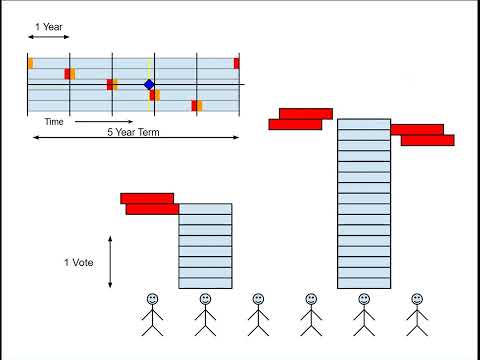
The Ballot Standard Monetary Act
The Ballot Standard Monetary Act is the statutory blueprint for implementing the Ballot as a legal standard money unit. It translates the core ideas of the Elastic Republic Ballot Market into enforceable law: how Ballots are issued, how supply is anchored to population, how demurrage is handled, and how institutions interface with the protocol.
The Act is written in conventional legislative style, with findings, definitions, operational provisions, and transition rules designed to let existing systems migrate toward a population-pegged monetary base without disruption.
- Defines the Ballot as a sovereign standard money unit with supply equal to the number of recognized persons.
- Establishes issuance, demurrage, and reconciliation procedures as rule-based, non-discretionary operations.
- Specifies the role of a Public Credit Authority and its limits.
- Provides transition mechanisms from debt-based systems toward Ballot-based settlement.
Read the full draft
The full text of the Ballot Standard Monetary Act is available as a standalone document for policymakers, legal scholars, and institutional reviewers.
Legislative Audience
Structured to slot into existing statutory frameworks, including sections on findings, definitions, authorities, and enforcement.
Technical Alignment
Mirrors the protocol logic described on this site so that law and code point at the same monetary behavior.
Commentary-Friendly
Suitable for side-by-side analysis with economic research and constitutional commentary.
📜
Ballot Standard Monetary Act — Full Legislative Draft (PDF)
🌐
Read Full Act (HTML)
For comments or requests for tailored jurisdictional language:
mike@elasticrepublic.com.
Monetary definition
Let N be the number of persons recognized by the system. Each person i has a Ballot balance Bᵢ. By design:
Σ Bᵢ (for i = 1…N) = N
In implementation, each balance is stored as a rational:
Bᵢ = aᵢ / D
where D is a global denominator (e.g., 10¹⁸ or a carefully chosen prime) to eliminate floating-point drift.
Block reconciliation
Each block performs a deterministic pipeline:
- Apply valid transactions Tₜ
- Apply demurrage: Bᵢ ← Bᵢ · (1 − λ)
- Distribute all demurrage proceeds equally per capita as UBI
- Settle obligations, debts, and relation-based transfers
- Normalize: rescale Bᵢ so that Σ Bᵢ = N, with deterministic tie-breaking for residual fractions
- Recompute sovereignty levels (SLᵢ) from the delegation graph
Tie-breaking uses a globally agreed ordering (e.g. hash of public key + index) so that all nodes converge on the same result without ambiguity.
Sovereignty graph & SL
Representation is modeled as a directed graph where edges represent voluntary delegation:
i ➜ j (with weight wᵢⱼ)
A representative’s sovereignty level can be expressed as:
SLⱼ = 1 + Σ (wᵢⱼ · f(depth(i, j)))
where f(·) is a depth penalty function that ensures distant chains of delegation do not explode in impact.
SL values feed into protocol decisions (e.g., quorum thresholds, veto capability, or budget prioritization) without replacing basic personhood equality: each person still anchors exactly one Ballot.
System layers
Identity Layer
Personhood attestations, KYC/verification hooks, and revocable credentials; pluggable to local legal regimes.
Monetary Layer
Ballot balances, transfers, demurrage, and normalization rules implemented as deterministic state transitions.
Sovereignty Layer
Delegation graph, SL computation, and routing of influence into governance and budget mechanisms.
Transparency Layer
Aggregated public data (flows, budgets, SL distributions) with selective disclosure of private activity.
Pilot & research
The Ballot standard is designed to be piloted alongside existing currencies and institutions. Potential launch paths include:
- A sandbox ledger for academic and policy research
- City- or region-level pilots as a complementary currency and governance system
- Integration into humanitarian or basic income experiments where fairness and transparency are crucial
All pilots share a common goal: validate how a population-pegged money unit behaves in the real world — for liquidity, stability, and political legitimacy.
Get involved
This is intended as an open standard, not a closed product. If you want to build, study, or legislate around the Ballot, the next step is to connect.
Policymakers & institutions
Collaborate on pilot legislation, regulatory frameworks, and integration paths that respect your constitutional context.
Researchers
Analyze macro dynamics, inequality impacts, and governance outcomes using simulated or real-world Ballot data.
Engineers
Implement reference nodes, wallets, and analytics dashboards. Contribute to open specifications and formal verification.
Contact:
mike@elasticrepublic.com
Website:
https://elasticrepublic.com